
PoE vs Traditional Displays: When to Use Which
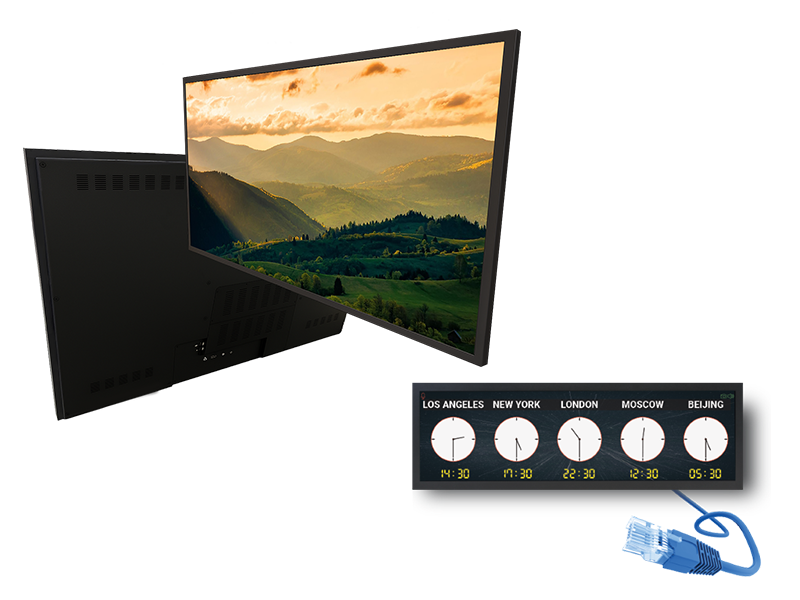
Digital displays are everywhere now. From lobbies and hallways to conference rooms and classrooms, screens have become a core communication tool. When planning a new display project, one of the first decisions teams face is whether to use a PoE Monitor or a traditional display with separate power and data connections. Both options serve important roles, and the right choice depends on the environment, scale, and long term goals of the installation.
Understanding the differences upfront helps avoid overbuilding or choosing a solution that complicates deployment later.
What Is a PoE Monitor?
A PoE Monitor uses Power over Ethernet technology to receive both power and data through a single Ethernet cable. Instead of running electrical wiring to each screen, the display connects back to a network switch that supplies power and content over standard CAT cable.
This approach simplifies installation and creates a cleaner infrastructure footprint. PoE displays are commonly used for digital signage, room scheduling, wayfinding, dashboards, and informational messaging where reliability and consistency matter more than extreme brightness or size.
Because the monitor is powered by the network, IT teams can manage and support displays using familiar tools and structured cabling practices.
What Defines a Traditional Display?
Traditional displays rely on a separate power source, usually a standard electrical outlet, along with a data connection such as HDMI, DisplayPort, or a media player. These screens dominate environments where high resolution, large formats, and advanced video performance are required.
You will see traditional displays in video walls, auditoriums, event spaces, broadcast environments, and executive boardrooms. They offer more flexibility in screen size, brightness, and processing power, but they also introduce more complexity during installation.
Power must be planned for each location, and additional hardware like media players or control systems is often required.
Installation and Infrastructure Considerations

One of the biggest differences between PoE and traditional displays is how they impact infrastructure.
A PoE Monitor reduces installation labor by removing the need for electrical work at each screen location. As long as network cabling exists, displays can be added or relocated with minimal disruption. This makes PoE ideal for retrofit projects, leased spaces, or buildings where opening walls is not practical.
Traditional displays require coordination between AV, IT, and electrical trades. Power availability becomes a limiting factor, especially in older buildings. While this is manageable in new construction, it can add time and cost in existing spaces.
If speed, consistency, and repeatability matter, PoE often has the edge.
Performance and Display Capabilities
Traditional displays still lead when it comes to raw performance. Larger sizes, ultra high brightness, and advanced color accuracy are easier to achieve with conventional power and dedicated video hardware. For applications like immersive video walls or large venue presentations, traditional displays are the better fit.
PoE displays focus on efficiency rather than maximum output. They are designed for content that prioritizes clarity, uptime, and legibility. In many signage and informational use cases, the difference in visual performance is not noticeable to the viewer.
The decision here comes down to content type. High impact visual storytelling leans traditional. Operational messaging and wayfinding lean PoE.
Scalability and Long Term Maintenance
Scalability is where PoE solutions stand out. Adding another PoE Monitor is often as simple as running an Ethernet cable and assigning a network port. Centralized power delivery and monitoring also make it easier to track device health and uptime across large deployments.
Maintenance tends to be more predictable because fewer components are involved. There are no local power adapters or media players to fail behind the screen.
Traditional displays scale well too, but they demand more planning. Each new screen adds power load, hardware, and points of failure. For large networks of displays, this can increase ongoing support requirements.
Security and Network Control
PoE displays integrate naturally into secure network environments. Traffic can be segmented, monitored, and controlled just like any other networked device. This makes them appealing for corporate, healthcare, and education environments where IT oversight is critical.
Traditional displays often rely on external players or consumer grade components that require additional hardening. While secure deployments are absolutely possible, they require more configuration and policy management.
When to Choose PoE
PoE is a strong choice when consistency, speed of deployment, and clean infrastructure matter most. Common use cases include:
- Modern office directories and room scheduling
- Wayfinding and informational signage
- Dashboards and internal communications
- Healthcare and education environments
- Facilities with limited access to electrical upgrades
If the project values simplicity and long term operational efficiency, PoE is often the right fit.
When Traditional Displays Make Sense
Traditional displays remain the go to option for visually demanding applications such as:
- Large format video walls
- High brightness public displays
- Event and presentation spaces
- Creative or marketing driven content
- Environments needing advanced processing
When visual impact is the priority, traditional displays justify the added complexity.
Making the Right Call | GPO Display
Choosing between a PoE Monitor and a traditional display is not about one being better than the other. It is about matching the technology to the job. Many facilities even use both, deploying PoE for everyday communication and traditional displays for flagship spaces.