
Simplifying Digital Signage Installations with PoE Technology
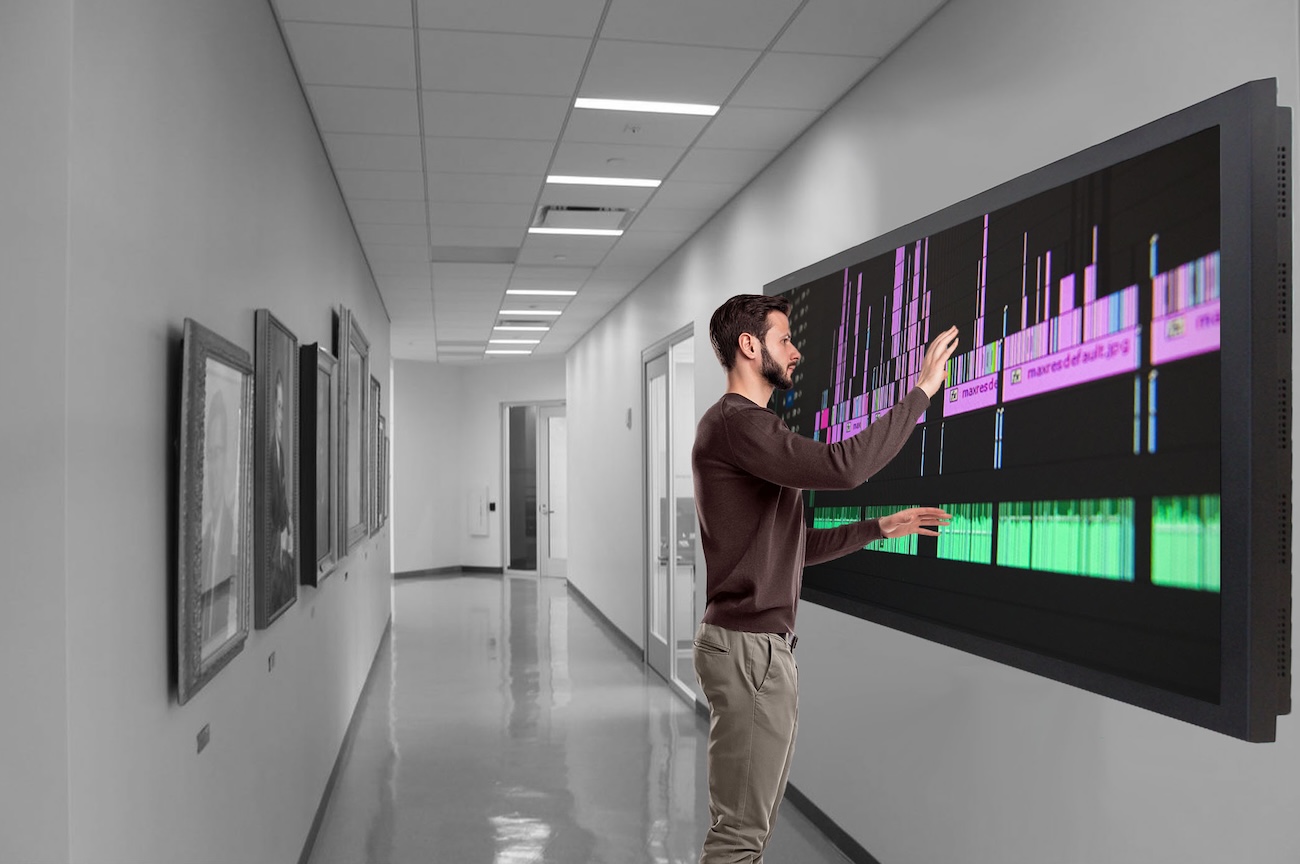
Anyone who has managed a signage rollout in a finished office, a government facility, or a secured building knows the friction that comes with it. Every display needs power, and getting power to the right spot often means coordinating with electricians, pulling permits, cutting into walls, and waiting. By the time the screen is up, the project has taken twice as long and cost more than expected.
Power over Ethernet changes that equation in a meaningful way. Rather than running both a network cable and a separate power line to each display, PoE delivers electricity and data through a single Ethernet cable. If there is already a network drop in a space, that drop can power a display. No outlet required, no conduit work, no additional trades involved.
At GPO Display, we have built our PoE monitor and panoramic LCD lineup around this reality. Paired with TRENDnet’s PoE++ injectors, our displays can go into nearly any space quickly and cleanly.
One Cable, Fewer Headaches
The practical benefits of a single-cable installation compound across a large project. An integrator deploying twenty displays saves twenty power runs. A facilities manager in a secure building avoids twenty new junction boxes and the access control considerations that come with them. A project that would have required electrical subcontractors can now be handled entirely by the network team.
This matters especially in spaces where physical access is controlled, ceilings are finished, or retrofitting is expensive. Above-door mounting locations, corridor installations, and older buildings with limited conduit capacity are all situations where PoE goes from a convenience to a genuine solution.
Where GPO PoE Displays Are Being Deployed
Room Status and Classification Signage
Federal and military facilities operate under strict requirements around communicating a room’s classification level. Staff need to know at a glance whether a space is cleared for classified discussion, and that information needs to be accurate and current. Static plaques cannot reflect real-time changes. Standard monitors require power infrastructure that may not exist near every doorway.
GPO’s wide-format PoE displays are well suited to this application. A single unit mounted above a door can show classification status, room availability, current occupancy, active microphone or camera indicators, and multi-time zone clocks simultaneously. The display is powered and connected through the same cable, keeping the installation clean and the wall free of additional hardware.
Wayfinding and Directory Signage
Large campuses, corporate headquarters, and government complexes deal with a constant wayfinding challenge. Directories go out of date, departments move, and printed signage requires physical replacement every time something changes. PoE panoramic displays mounted in corridors or lobbies can be updated remotely and instantly, with no one touching the screen itself.
The form factor matters here. A standard widescreen display is often too tall for a corridor or above-door installation. GPO’s panoramic LCDs are designed for exactly these locations, fitting into spaces where a conventional display simply would not work.
Dynamic Nameplates and Session Signage
Courtrooms, council chambers, and legislative spaces frequently need displays that communicate different information session to session. A PoE display can be updated remotely between sessions without anyone physically accessing the unit, which reduces labor and eliminates the risk of signage being out of sync with what is actually happening in the room.
The POE57D
GPO’s POE57D is a 57-inch diagonal panoramic display with a resolution of 3,840×430. It spans roughly the same width as a standard 65-inch 4K panel but stands only a fraction of the height. That makes it ideal for ticker-style content: classification banners, world clocks, news headlines, or schedule information that needs to be readable at a distance across a wide horizontal span. Like the rest of the GPO PoE lineup, it runs on 802.3bt PoE++ power delivered through a single Ethernet cable.
Powering GPO Displays with TRENDnet Injectors
GPO’s PoE display lineup requires 802.3bt Type 4 power, also referred to as PoE++, which supports up to 90 to 95 watts per port. Where a PoE++ capable switch is not already in place, a midspan injector bridges the gap between an existing network switch and the display. TRENDnet makes two injectors that pair particularly well with GPO deployments.
TPE-119GI
The TPE-119GI is a single-port Gigabit injector that delivers up to 95W and auto-negotiates the correct power level for whatever device is connected. It handles the full GPO display range without any manual configuration, and its compact wall-mount form factor keeps it out of the way in finished spaces. It is TAA and NDAA compliant.
TI-IG290
The TI-IG290 is built for environments where conditions are less forgiving. It is a two-port industrial injector rated for operating temperatures from -40°C to 75°C, with an IP30-rated enclosure, certified resistance to shock and vibration, redundant power inputs, and 2KV surge protection. Its 180W total PoE budget across two ports supports multiple GPO displays from a single unit, and the fanless design keeps things quiet and maintenance-free. DIN-Rail and wall mount options are both included. The TI-IG290 is also TAA and NDAA compliant.
A Simpler Deployment Stack | GPO Display Livermore, CA
What GPO and TRENDnet offer together is a reduction in complexity. A digital signage deployment comes down to three things: a network drop, a display, and an injector if a PoE++ switch is not already present. There is no separate power circuit to plan around, no splitter hardware, and nothing additional between the network and the screen.
For integrators, fewer components means faster installs and tighter project timelines. For procurement teams working within federal or government frameworks, TAA and NDAA compliance across both the display and the injector checks the supply chain requirements that most U.S. government contracts carry.